
ESSAY
The Rooms Opened
On 19 July 2021 England let the nightclubs open again. Fabric had about 900 people in. A vaccine pass was not required. A lateral-flow test got you a shorter queue.
- format
- Essay
- date
- Jul 19, 2021
- author
- CJ Archer
- places
- London, Amsterdam
- words
- 603 words · 3 min
- photo
- Photo: Martijn Savenije
England lifted most of the legal limits on social contact on 19 July 2021. The BBC reported that nightclubs could open from midnight, that there was no cap on how many people could be in a room, and that Boris Johnson was asking the country to be careful while making almost none of the care a legal requirement. Venues were encouraged to check the NHS Covid Pass. They did not have to. A negative test was not a condition of walking through the door.
Fabric, in Farringdon, opened that night. Sasha Mistlin, in the Guardian, described hundreds of people at an event billed as “an immersive world of artistry, expressiveness and innovations,” the first clubbing of that kind in the building since March 2020. Co-founder Cameron Leslie told him they had “in the region of 900” people in, and called the night a prequel to a bigger weekend. A negative test taken in the previous 48 hours got you a VIP queue further up the street. Being vaccinated did not. Nobody on the door was sure whether the test had to be a PCR or whether a lateral flow would do. Leslie said the guidance had piled operational confusion on the clubs, and that operators were in an impossible position trying to explain it.
The quotes Mistlin brought back are more useful than a policy summary, because they are frightened and pleased at the same time. Jake Jeffery, 24, said he kept thinking the night might be illegal. Josh Lee, 25, a UCL student, called it a gamble, worried about the glasses at the water bar, and said it would be unfair to put a rise in cases on the clubs, because “everyone shut their mouth about Covid during the Euros.” Katy Jebson, 19, from Greenwich, said she had not been clubbing for a year and a half. Beth, 24, said it felt as if she had forgotten how to dance, and that it was coming back. Dylan Talfe, just turned 19, spent the night mainly in the techno room. He told Mistlin he had spent most of his first adult year sitting outside, and that his life had felt, to a degree, on hold.
In Leeds the same midnight, the BBC’s reporter was at Fibre. The doors opened onto a crowd that was not asked for a negative test and not asked for a pass. Hand sanitiser was there. It was optional. The first record was Ultra Naté’s Free. Owner Terry George told the BBC that several customers were unvaccinated or had only had one jab, and that he had not been given a way to scan a pass even if he had wanted one. A 20-year-old, Mollie, called it the best night of their lives, after waiting since they turned 18.
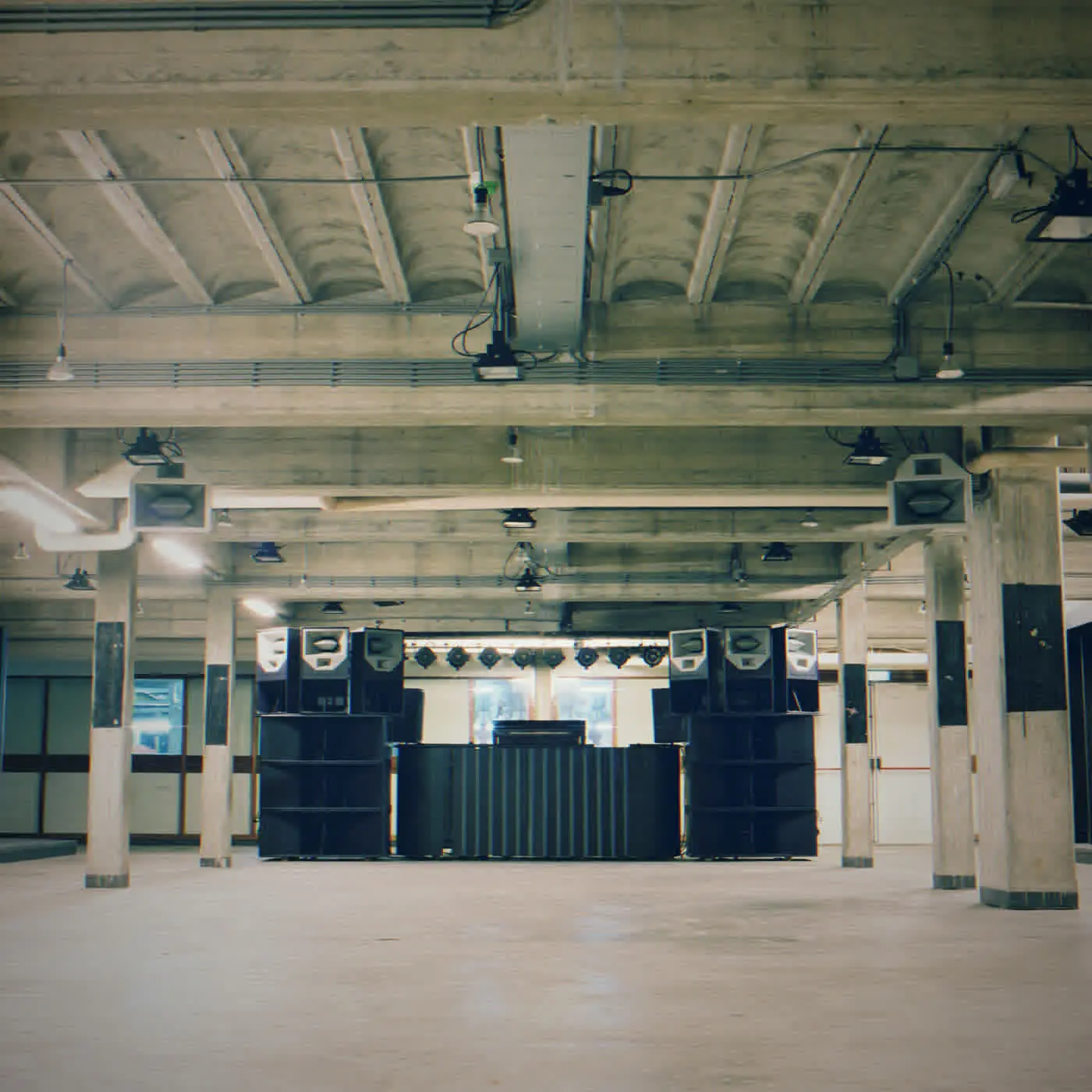
The photograph on this page shows a different night: the dancefloor at De School in Amsterdam, taken by Martijn Savenije. A different city, a different licence, a room with its own calendar. England’s story does not need to borrow the picture in order to be clear. What England did, on paper, was declare the clubs legal again and decline to decide who was safe enough to walk in. Fabric made a faster queue out of a lateral-flow test and let everyone else through. Fibre played a record called Free and opened the floor. Jeffery’s suspicion, that a legal night might still be a crime, was the most accurate review of the policy anyone gave a reporter that morning. The government had said yes. After a year and a half, the body did not believe the sentence until the door opened.