

BERLIN
The List Stayed Short
Mark Ernestus opened Hard Wax in Kreuzberg in 1989, because Berlin had no shop that took acid and house seriously. A killer record moved 150 copies. The next one would not sell three. The descriptions stayed short enough to survive the building.
- format
- Feature
- volume
- 11
- date
- Nov 21, 2026
- author
- CJ Archer
- places
- Berlin, Kreuzberg, Detroit
- artists
- Basic Channel, Mark Ernestus, Moritz von Oswald
- words
- 1,290 words · 6 min
- photo
- Photo: Assenmacher
A killer record, Mark Ernestus told Derek Walmsley, is 150 copies. The next record is “total shit” and will not sell three. There is a seriousness about the producers and about the audience. It either works or it doesn’t. He said this for The Wire in February 2010, with Hard Wax just past twenty years. The shop’s review is a number. It does not come with a paragraph.
He had opened the shop in 1989 on Reichenberger Straße in Kreuzberg. Talking to Tobias Rapp in 1996, as the manager Rapp calls Mark, he said there had simply been no record shop in Berlin that took acid and house seriously. One distributor handled electronic dance music, so the maxi-singles people wanted rarely reached Germany. Hard Wax started bringing them in from Detroit, Chicago and New York. They had thought Berlin was the absolute provinces. Then they went to Detroit and Chicago and found the scenes in those cities were hardly speaking to each other either.
By 1992, when Berlin’s techno scene blew open, the counter on Reichenberger Straße was a stop on the way through. Jeff Mills, Carl Craig and Ron Trent came via the Hard Wax connection, made music in the city, and bought records in the shop. DJs pushed the counter, especially while it was still the only shop, and the staff tried to hold the line. The fanfare end of the big rave was not what they stocked. Rapp wrote that the slow collapse of that movement was watched from behind the counter with more Schadenfreude than regret.
Six turntables, twenty-five thousand records
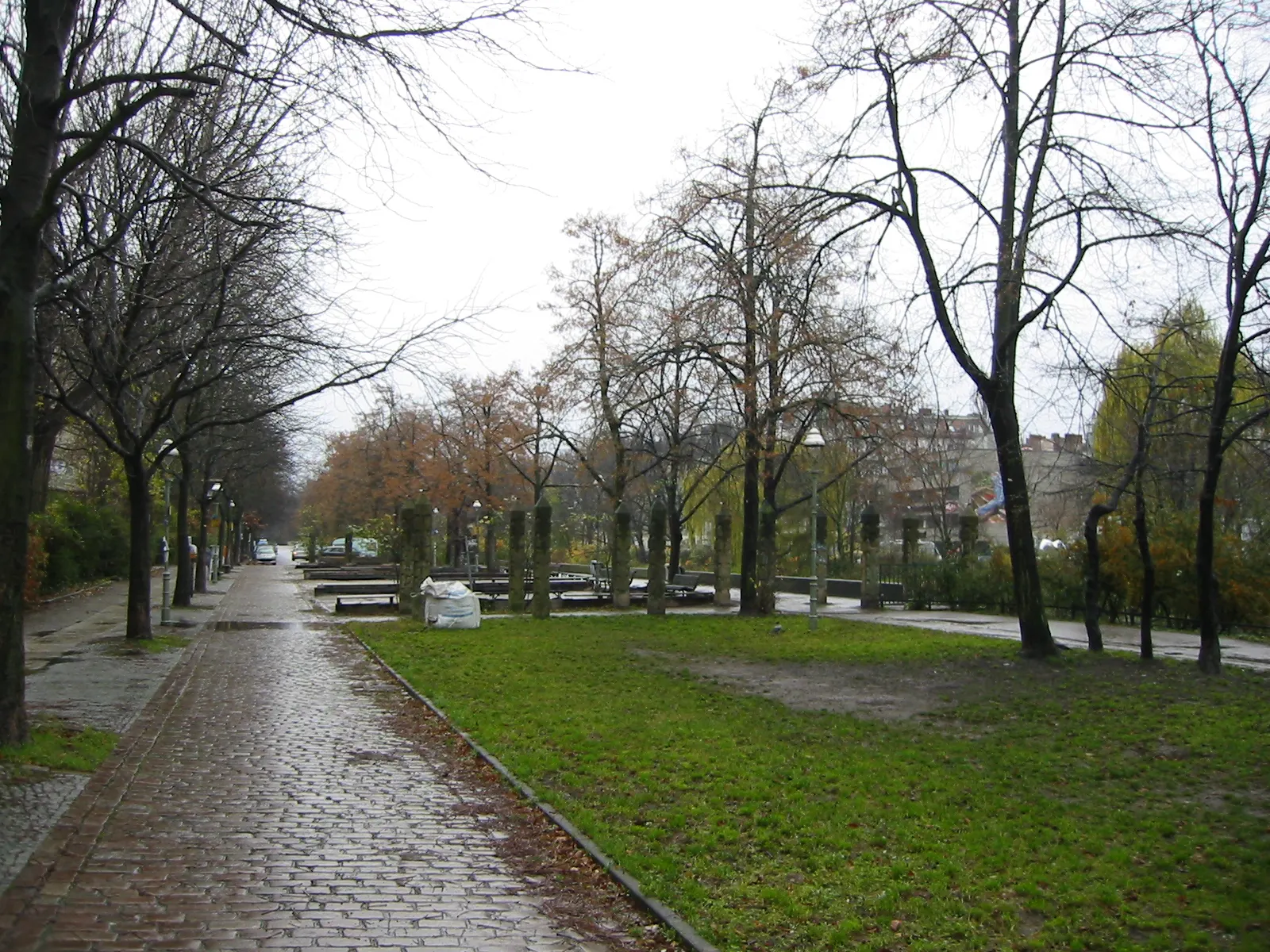
By the week Rapp’s piece ran, 14 November 1996, the move had already happened, that Monday, to Paul-Lincke-Ufer 44a. About 25,000 records had been packed, carried and filed again. The new shop had six turntables. A customer who wanted one no longer had to get there with his elbows. A sofa corner was planned and not yet built. Buying records and hanging out, Ernestus said, belong together. At last there was room for both.
Basic Channel’s studio was in the same building. Producers could have a dubplate cut there, one plate of a new track, and the label cared more about the music than about the sales figures. The label is Ernestus and Moritz von Oswald, begun in Berlin in 1993. Between 1993 and 1994 they issued nine 12-inches under several names. Cyrus’s “Enforcement” is BC-01. Basic Channel’s “Phylyps Trak II” is BC-09. BCD, a CD of edits taken from the 12-inches, came out in 1995. BCD-2 followed in 2008. A listener looking for a biography on the sleeve will not find one. Ernestus told Walmsley he would rather be invisible. What he wanted was his genetic code inside the genetic code of the music.
In 1996 Biba Kopf sat in the shop for three hours while they played him a history: Phuture, Armando and Armani, then Cybotron, Model 500, Underground Resistance, Jeff Mills, Robert Hood and Juan Atkins. They gave him first names only. A surname withheld and a sleeve left nearly blank are the same manners.
The word they took off the list
Dub was not a hobby kept in the back. Ernestus put it as a test, in an Electronic Beats interview Dunn Johnson quoted in 2014. If you love techno and do not at least appreciate dub, or other music built on reduction and repetition, something is wrong. There is not supposed to be a divide. In the shop Johnson found a wall of reggae and dub 45s next to the Basic Channel archive and the Detroit rarities. The section growing fastest was the one they called Outernational, stocked in part with records tied to the musicians Ernestus was working with in Senegal. On the label, the same principle already had a catalogue number. In 1998 Rhythm & Sound issued RS-02, the Chosen Brothers’ “Mango Walk” on one side and “Mango Drive” on the other.
The short descriptions began as a cost. Michael Hain had been behind the counter since 2001. When Johnson visited he was store manager, and he traced the clipped language to printed catalogues mailed to subscribers. Paper and postage set the length. You wrote the precise thing because there was no room for a second sentence. Mail order was there from the beginning, Hain said, because Ernestus knew how hard the music was to find if you did not live in Berlin, London or Hamburg. Once the website had a shop on it, the rule was that the page and the room held the same records. What you see on the site is what you get in the shop. Hain spoke about customers in small cities from Australia and Taiwan out to Malta and Singapore. You do not, he said, need a Berghain in your town to get the music.
For a while the strongest mark on a Hard Wax recommendation was one word, TIP!. In 2012 Joy Orbison put the habit in a title, “Big Room Tech House DJ Tool – TIP!”. The track came out in 2013 on Nonplus’s compilation Think and Change. The joke travelled far enough for the shop to retire the word. Hain had found it funny, and TIP! had become a thing it was never meant to be. A stamp people can collect is no longer a description of a record. The list went back to describing the record.
Three addresses
On 13 October 2023 the shop posted that it would open on Monday 30 October at Köpenicker Straße 70, 10179 Berlin-Mitte, inside Kraftwerk, with the door between Tresor and Ohm. April Clare Welsh, in DJ Mag three days later, counts 27 years at Paul-Lincke-Ufer. The Kreuzberg building was headed for luxury flats. Dubplates & Mastering, 28 years old and housed in the same building, had already said the new owner terminated the lease after October 2023. The first address was the street where a shop imported what the distributor would not carry. The second was the canal, six turntables, a studio, a cutting room. The third sits between two clubs.
About 25,000 records had moved once already, in 1996. They moved again. A counter that will sell 150 of one record and three of the next is publishing a criticism in quantities, every week, without writing the criticism out. Someone in a town with no club can still read the quantities. The building on the canal could be sold out from under the cutting room. The list was made to be carried.
Sources
- Derek Walmsley, interview with Mark Ernestus, The Wire, February 2010, extracted by Fact, 19 January 2010: https://www.factmag.com/2010/01/19/mark-ernestus-and-the-seriousness/
- Tobias Rapp, “Berlin/Detroit Techno Alliance,” taz, 14 November 1996. German. The quotations from Ernestus in this piece are translated from that article: https://taz.de/Berlin/Detroit-Techno-Alliance/!1428621/
- Dunn Johnson, “Record Store Week: Hard Wax,” XLR8R, 21 July 2014, including Michael Hain, the Electronic Beats quotation, and the account of Biba Kopf’s 1996 visit: https://xlr8r.com/features/record-store-week-hard-wax/
- April Clare Welsh, “Legendary Berlin record store Hard Wax is relocating due to redevelopment,” DJ Mag, 16 October 2023: https://djmag.com/news/legendary-berlin-record-store-hard-wax-relocating-due-redevelopment
- Basic Channel discography, including BC-01 through BC-09, BCD (1995), BCD-2 (2008), and Rhythm & Sound RS-02 (1998): https://en.wikipedia.org/wiki/Basic_Channel