

CHICAGO
Ammnesia
Jack Trax released Mr. Fingers' Ammnesia in the UK on 3 April 1989, catalogue FING 2, a letter short and licensed from Trax. Larry Heard had not authorized it. On 27 June 2022 his label Alleviated issued Amnesia, the spelling corrected.
- format
- Review
- volume
- 11
- date
- Nov 21, 2026
- author
- CJ Archer
- places
- Chicago
- artists
- Larry Heard, Mr. Fingers
- words
- 852 words · 4 min
- photo
- Photo: deepsonic
On 3 April 1989 Jack Trax in the UK put out a double LP called Ammnesia, catalogue FING 2, licensed from Trax in Chicago. The sleeve is short a letter. Discogs credits Larry Heard with producing, writing and arranging it. Two of the twelve tracks, “Let’s Dance All Night” and “Bye Bye,” had not been issued before. The rest had already been singles. “Can You Feel It,” “Washing Machine” and “Beyond the Clouds” had shared a 12-inch. Heard had not authorized the album. For a long time the misspelled object was the one people meant when they named his early singles as a single thing.
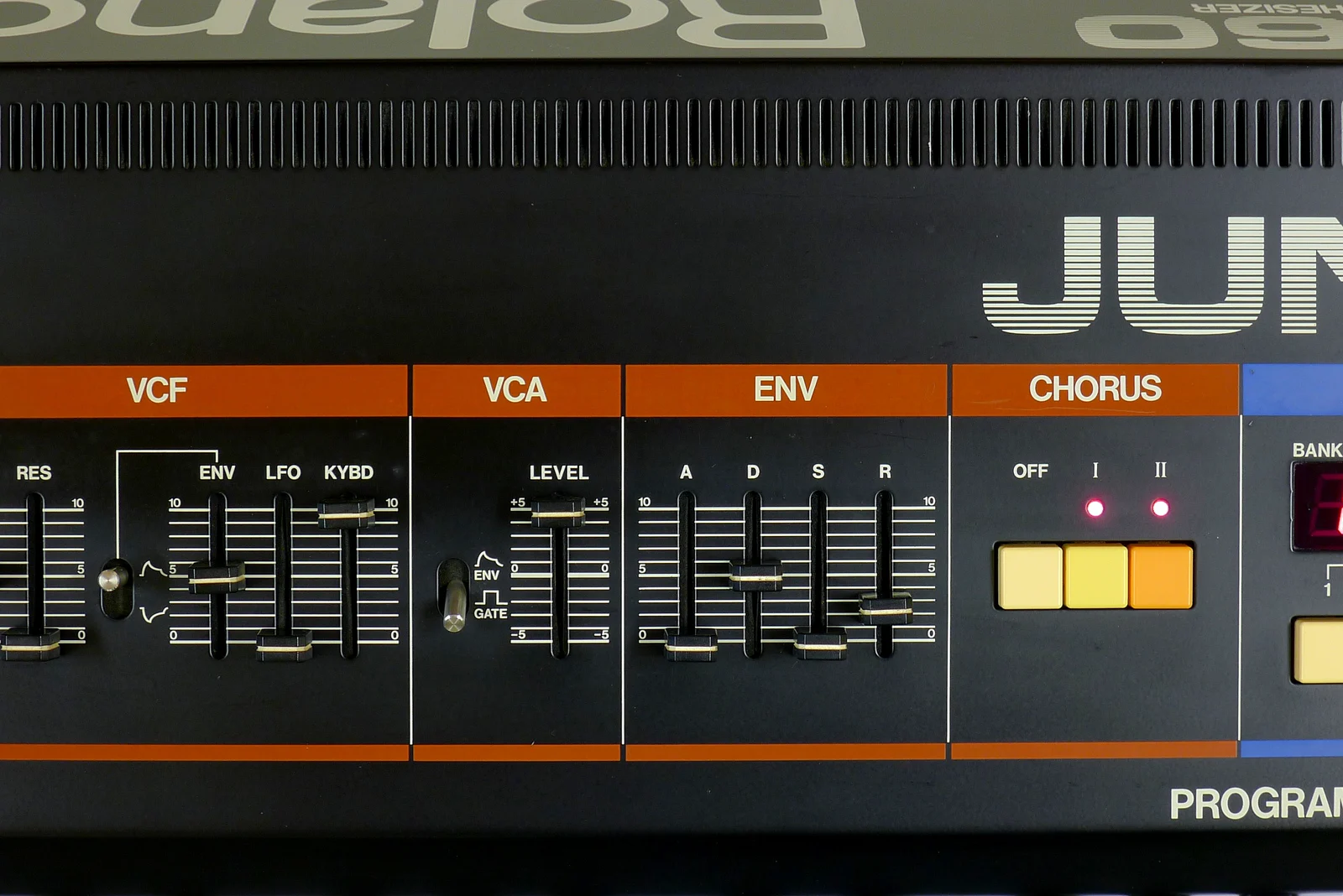
He was born on 31 May 1960, on the South Side of Chicago. A job as a benefit authorizer for the US government is what paid for the first studio gear. At 17 he was the drummer in Infinity, a jazz-fusion cover band that included Adonis. In 1984 he bought a Roland Juno-60 and a TR-909. Within a few days he had three pieces that stayed: “Can You Feel It,” “Mystery of Love” and “Washing Machine.”
“Mystery of Love” came out in 1985 on his own Alleviated Music. The “Washing Machine” release is the one that put him on Trax, and “Can You Feel It” was on that record. He told Josh Baines, over Skype, for a piece published on 27 June 2017, that the song used a Juno-60 and a TR-909 and nothing else. There were no digital recorders and no multitrack. He had two cassette decks. One take, one pass, onto one tape, then back onto the other while he played the next parts by hand. “It wasn’t exactly the Beatles,” he said.
Getting the cassette to the right person was the rest of the job. The point, he told Baines, was “getting it to Ron Hardy and Frankie Knuckles and Wayne Williams and people like that around town, people synonymous with party events.” He had not started out knowing Knuckles. “I was just another bright-eyed kid coming up to him with a record.” The Warehouse piece on this desk is the resident’s side of that afternoon. Heard’s side is the kid with the tape.
One pass
He met the singer and DJ Robert Owens at a party. With Owens and Ron Wilson he formed Fingers Inc. In 1988 the group released the double LP Another Side, the first long-form house album. The Mr. Fingers singles kept coming alongside it. Ammnesia is what happened when a UK label stacked the early solo records, added two new songs, and sent the pile out under a title with a letter missing.
The bassline on “Can You Feel It” is six notes. Under it, a drum machine and a few pads. Heard’s account of the overdubs is a second pass between two cassette decks. That was the studio. The record left the house on a cassette, then on a Trax 12-inch, then, without his say-so, on a double LP whose title could not spell the condition it was named for.
The letter, then the signature
In 2022 Heard’s own label, Alleviated, put the album out as Amnesia, the vowel restored. The CD, catalogue ML9002CD, is dated 27 June 2022. It is the first time the album was officially available, and the first edition he authorized. From the Jack Trax date to that date is thirty-three years.
Jack Trax printed Ammnesia. Alleviated was willing to sign Amnesia. A listener meets the same take under either spelling: one pass, then the tape run back, then a hand adding the next part, on a Juno-60 and a 909. The authorization is a question of custody. It does not rewrite the pass. The pass had already left the house, under a title with a letter missing, and the letter was never what people were dancing to when they asked for the record by the wrong name and got the right one.
Sources
- Discogs, Mr. Fingers, Ammnesia (Jack Trax FING 2, UK, 3 April 1989), including the credit to Larry Heard, the licence from Trax, and the note that “Let’s Dance All Night” and “Bye Bye” were previously unissued: https://www.discogs.com/release/4518-Mr-Fingers-Ammnesia
- Josh Baines, “Larry Heard Talks Us Through the Making of ‘Can You Feel It,’” Vice, 27 June 2017: https://www.vice.com/en/article/larry-heard-can-you-feel-it-making-of/
- Larry Heard, born 31 May 1960 on the South Side of Chicago; Infinity with Adonis; the 1984 Juno-60 and TR-909; Ammnesia issued without his permission; the 2022 Alleviated edition the first he authorized: https://en.wikipedia.org/wiki/Larry_Heard
- Word and Sound, Mr. Fingers, Amnesia (Alleviated ML9002CD, 27 June 2022): https://wordandsound.net/release/135877-ML9002CD-Mr-Fingers-Amnesia