ESSAY
The Strait Is Not a Scene
Club Copy’s Bandcamp names Cumberland. The roster reaches Athens. A catalogue with a return address is not a scene.
- format
- Essay
- date
- Oct 19, 2026
- author
- CJ Archer
- places
- Cumberland, Vancouver, Athens
- artists
- LT Drifta, Forsberg, Riscape
- words
- 1,077 words · 5 min
- photo
- Artwork: VCR Recordings
The word scene does unpaid work for a small label. It suggests a density of rooms, a weekly crowd, a door someone can describe, a sound that people outside the town could recognize as coming from the town. Club Copy does not have that document. What it has is an address, a date, a sentence, and a short list of names. The Bandcamp page says Cumberland, British Columbia, and independent electronic music from the Pacific Northwest. The about page says the label was founded by Charlie Archer, who also writes this zine as CJ Archer. The page’s data gives the founding date as 12 February 2024. The line on the about page is “Music we want to keep.” Published under Copy House Publishing. Based in British Columbia. Those sentences are the whole geography the label has put in public. They are enough to start from. They are not a scene.
Cumberland is on the east side of Vancouver Island, in the Comox Valley. Vancouver, the city several marketing lines keep reaching for, is on the mainland, across the Strait of Georgia. The water is not a metaphor a magazine has to invent. A ferry is a timetable. The practical version is a sailing: the night ends when the boat does, or it ends on the side you are already on. This piece will not supply a venue on either shore to make the geography warmer. The point is the mismatch already printed. Forsberg’s Bandcamp says “House music from Cumberland, BC.” The Club Copy artist page and the roster say Vancouver, and the roster calls the music “Sample-driven lo-fi house from the Pacific Northwest.” LT Drifta’s roster line says Cumberland, tagged “Jungle / Breaks.” Molly Haze’s roster line says Cumberland too, “UK garage made for sweaty dancefloors and staying out all night,” while the artist page’s own bio is one word, “k-i-s-s-i-n-g.,” and lists no release. Riscape’s page says Athens. The roster gives the latest title as Tell Me. The artists page introduces the list as “Artists from the Pacific Northwest and beyond,” house, UK garage, jungle and breaks. The “and beyond” is the honest clause. Athens is not a neighborhood of Cumberland. A label that includes it cannot claim to be a local scene report, even when three of the names share a town.
Cascadia is a regional name for the coastal Pacific Northwest, used on both sides of the border for a landscape and, sometimes, for a culture people would like to be one thing. It is a wide word. House is a wide word, and so are jungle and UK garage. Width is not a scene. A scene needs repetition in public: the same room, the same night of the week, names a newcomer could learn by going. A catalogue needs a number and a price. On the evidence of its own pages, Club Copy has chosen the second job and borrowed some of the language of the first. “Pacific Northwest” on a Bandcamp line is a true region. It becomes a costume when it is asked to stand in for a circuit of clubs the site does not name. This issue’s scene reports are about rooms that published their names, in other cities, because those rooms were in the reporting. Cumberland’s nights are not in that reporting. The absence should stay visible. Filling it with a plausible bar would be a fiction, and a fiction is the opposite of a page someone can use in five years.
What a small label can be, instead, is a shelf with a return address. The return address is Cumberland. The shelf is the CC numbers: an instrumental filed as hip-hop, a jazz album, an electronic album, house from a producer whose town the pages have not agreed on, house from Athens, a cassette — You Are (Love) — described on its page as the first Club Copy cassette and already sold out. The music does not require the town to be a capital. Standards, breaks, garage, the steady pulse of house: these are forms that moved through London, Chicago, Detroit, Bristol, New York, Athens, and a long list of towns smaller than any of those. A producer in the Comox Valley using those forms is not a provincial copy of a real scene somewhere else. The work is a global toolkit used in a specific place. The place enters the story when the pages tell the truth about it, and when they fail to. Drifta in Cumberland, Forsberg’s Cumberland on Bandcamp and Vancouver on the label page, Molly Haze in Cumberland with no title in the shop, Riscape in Athens with the records: that map is more precise than “Pacific Northwest electronic.” It has a disagreement in it. Disagreements are how a document differs from a brochure.
The Strait is a useful image only while it remains a strait. It is water with a timetable, not a brand. On one side is Cumberland, the town the Bandcamp page names. On the other is Vancouver, which the artist pages sometimes print even when Bandcamp does not, and which has nightlife arguments of its own that this label does not get to annex. Past both is Athens, in the roster because the records were wanted. “Music we want to keep” is the sentence that survives the geography. Keeping is a judgement about a track, a mix, a tape. It is not a claim that the town has a district. The risk for a magazine attached to the label — and this one is attached; the editor’s name is the founder’s — is to write the district anyway, because a scene is a more exciting subject than a shelf. The shelf is the subject a reader can recheck.
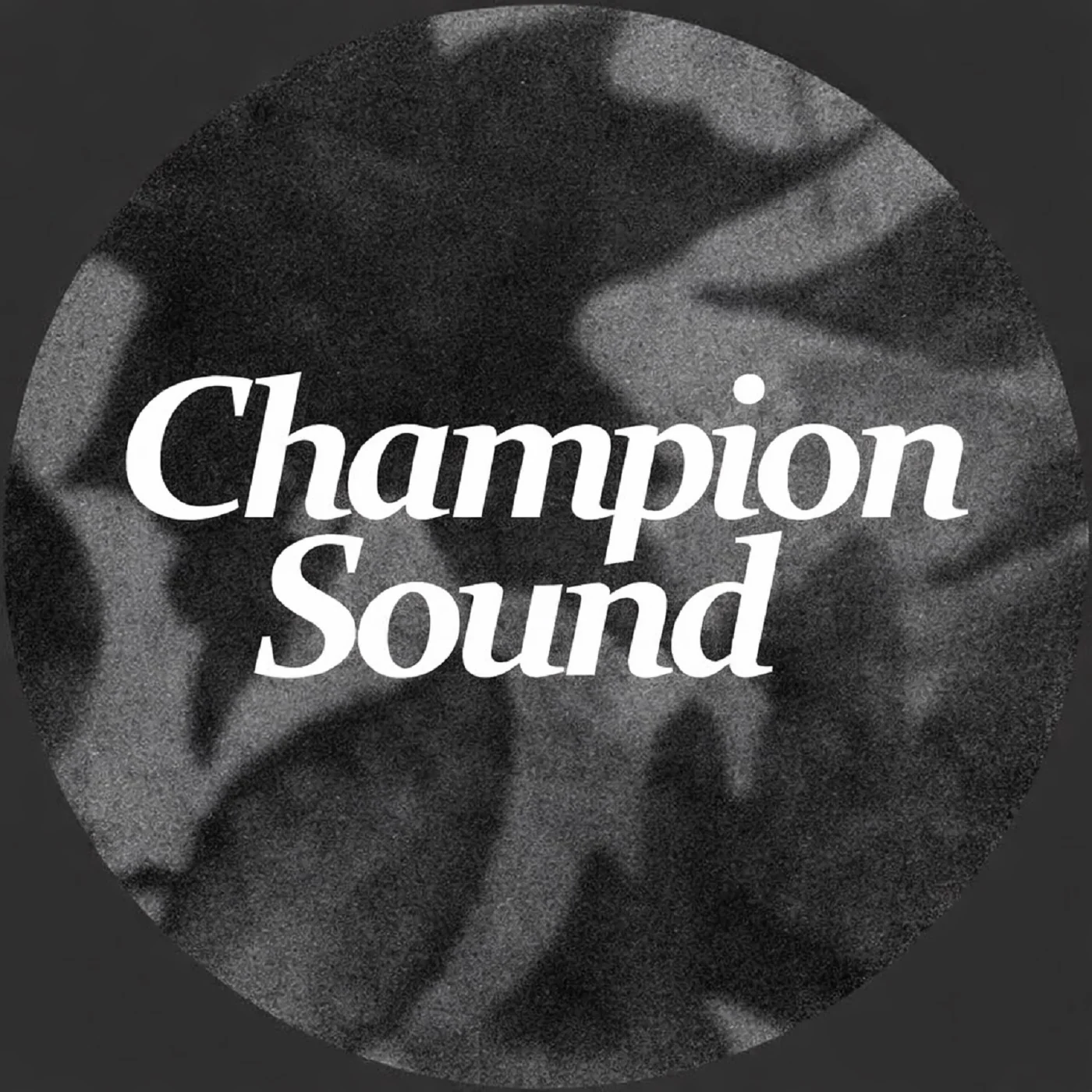
The picture at the top of this piece is the Champion Sound sleeve, for that reason. There is no credited photograph of a Cumberland night in the drawer this issue was willing to use. Printing a sleeve instead of an invented room is the local fact. The music on the sleeve belongs to forms that were already global before anyone on this roster was publishing. A reader who wants a scene can go to a room that prints its name. A reader who wants the label can start with the five Drifta titles, the Forsberg records, the Riscape EPs, and the mixes page, and can set aside any older note in this zine that offers a temperature where a title should be.