
REVIEW
Love Deluxe
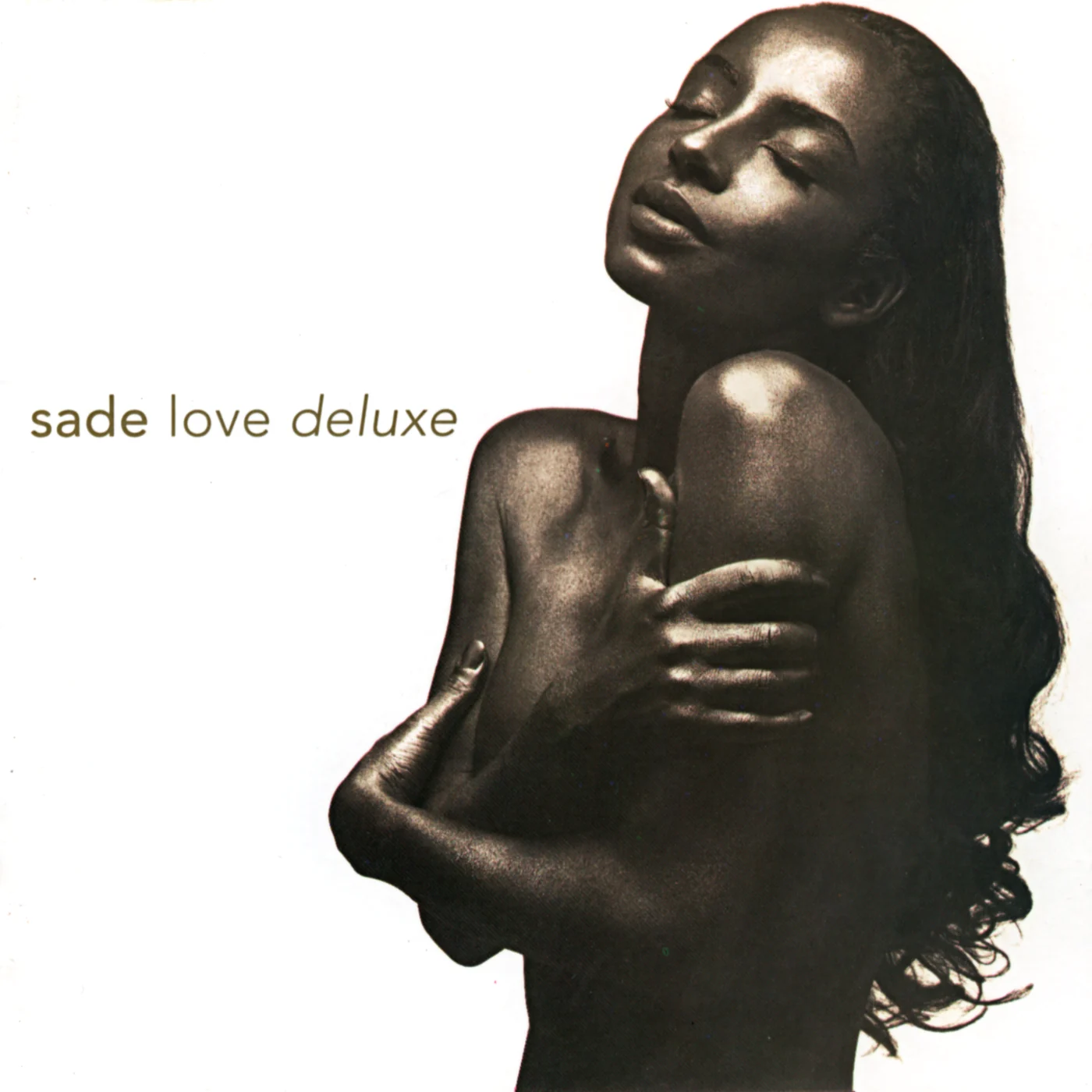
Sade's fourth album, Epic, 26 October 1992. Quiet, on this record, is a decision with a rhythm section under it.
- format
- Review
- volume
- 9
- date
- Sep 4, 2026
- author
- CJ Archer
- artists
- Sade
- words
- 771 words · 4 min
By 1992 Sade had already been filed as sophisticated background, which was a way of not hearing the bass. Love Deluxe, out on Epic on 26 October 1992, is the album that makes the filing impossible. Sade Adu, Stuart Matthewman, Andrew Hale, Paul Denman. “No Ordinary Love,” “Feel No Pain,” “Like a Tattoo,” “Kiss of Life,” “Cherish the Day,” “Pearls,” “Bullet Proof Soul.” The songs are too severe to sit behind a conversation unless the conversation is willing to lose.
“No Ordinary Love” was the lead single and is the template: a bassline that occupies the foreground, a vocal that will not raise its volume to win the argument, a lyric of devotion that does not bargain. Sade’s technical choice, across the catalogue and here especially, is to sing as if intimacy were a microphone position rather than an emotional performance. She does not belt. The band does not fill. Hale’s keyboards and Matthewman’s guitar leave pockets, and Denman’s bass sits in those pockets like a voice of its own. If you have been told this music is smooth, listen to the bass. Smooth is what people say when they are embarrassed that a song made them feel something unambiguous.
“Pearls” is the track that should end the dinner-party argument. It is about a woman in Somalia, and it is as direct as the album gets. A record that contains “Pearls” cannot be honestly described as luxury and nothing else. Luxury is in the tone of the recording — the care, the quiet, the refusal of harsh frequencies — and the subject matter keeps walking in with dirt on its shoes. “Feel No Pain” looks at unemployment. “Like a Tattoo” is a war memory. The deluxe of the title is a frame. Inside the frame the songs are about money, damage, and attachment. The band’s decision to play them softly is not evasion. Softness makes you lean in, and leaning in is how you hear the words. A louder arrangement would have let a casual listener off the hook.
“Kiss of Life” and “Cherish the Day” are the songs that justify the album’s reputation for sensuality, and they earn it by specificity. Cherishing a day, in the lyric, is a whole romance philosophy: the ordinary calendar as the site of love, not the grand gesture. That idea has been cheapened by a thousand playlists. On the record it is carried by a groove so patient it feels physical. This is where Sade belongs in a magazine that also covers house music. House, at its best, is ordinary time organized by a drum until the ordinary becomes the event. Love Deluxe does it with a live band and a singer who never sounds in a hurry. Riscape’s note on You Are (Love), about classic structures and homage, is a house producer describing a related ambition. Forsberg’s “long loops” are the electronic version of a band willing to stay on one feeling. The connection is a song tradition, and this album is one of its peaks. Nobody here is claiming the Club Copy records equal it.
The album’s cultural afterlife has been strange in a way that suits it. It never quite went away, and it never quite became a critics’ battleground the way louder 1990s records did. People kept it in houses. That domestic reputation is accurate and incomplete. Accurate, because the dynamics suit a room more than a stadium. Incomplete, because domestic has been used to mean minor. There is nothing minor about the restraint. Restraint is expensive. It means every player agrees not to do the obvious thing, for a whole album, in 1992, when obvious things were widely available. Epic put it out as a major-label record. It does not sound like a compromise with the year. It sounds like a group that had already decided what it was on Diamond Life and was now confident enough to be even quieter.
A previous version of this page recommended the album as something to put on “when people are still in the apartment,” and then turned the recommendation into a set of instructions about candles and jackets. The instructions can go. The recommendation, stripped of them, is fine. Love Deluxe is a record for shared rooms because it does not compete with the room. It also does not disappear. “No Ordinary Love” will sit under a conversation for a minute and then, if the bass is up, end the conversation. That is the level the band chose on a fourth album: quiet enough for a shared room, with the rhythm section standing where the volume would have been.