
ESSAY
The Pants Stay On
Nine signatures on a 6 February 2026 petition tried to police pajama pants. The flyers were already printing the cat.
- format
- Essay
- volume
- 9
- date
- Sep 9, 2026
- author
- CJ Archer
- words
- 680 words · 3 min
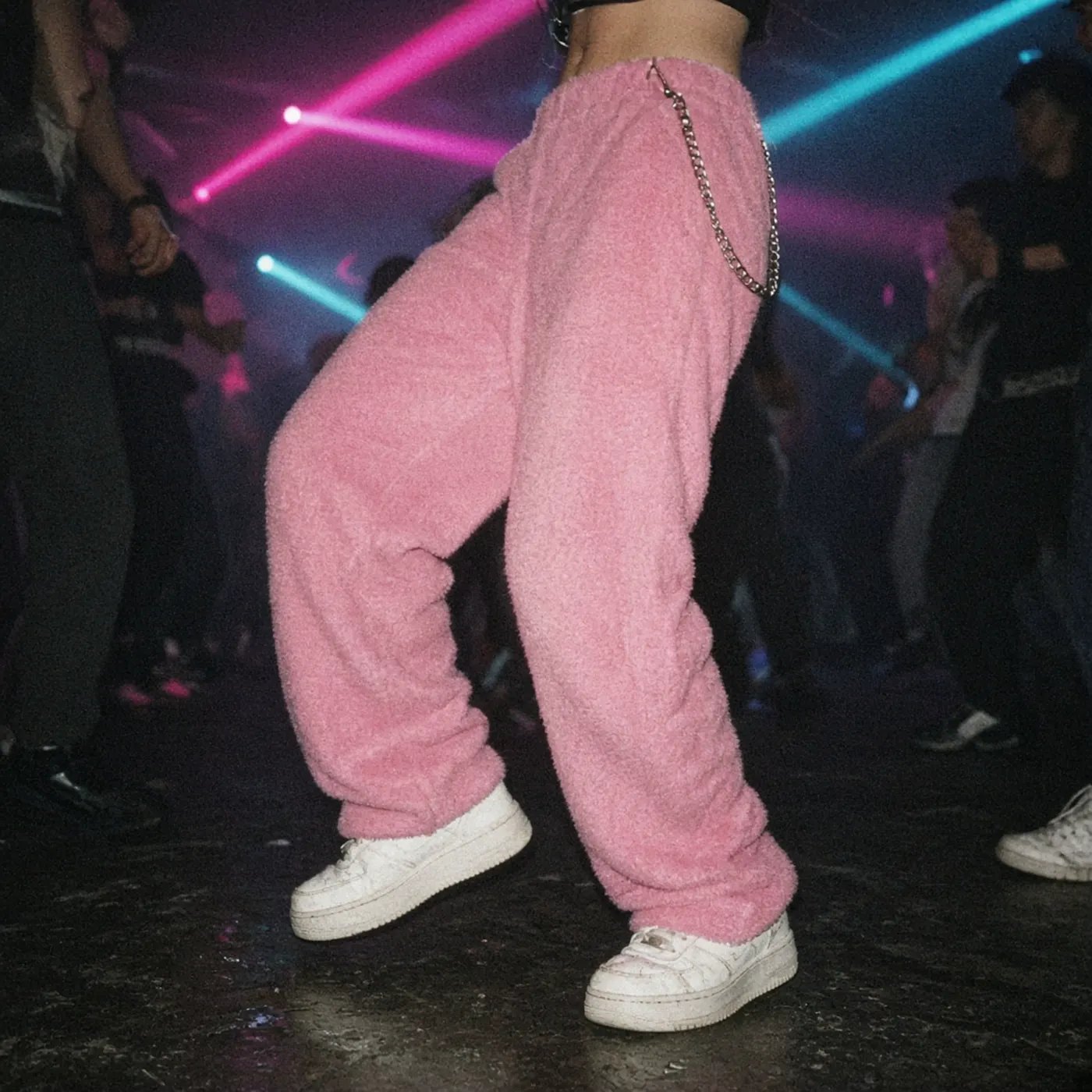
On 6 February 2026 a Change.org petition opened by Samantha Scott argued that Hello Kitty pajama pants were ruining raves. The text, as it circulated, called the pants mass-produced sleepwear, “not self-expression” but laziness, and claimed they announced that the wearer had got dressed in the dark. EDM.com counted the signatures. There were nine. By the time this desk wrote about it, in September 2026, the petition had sat untouched by anything resembling a scene: no door policy anyone could point to, no promoter’s statement, a brief life as a joke, and then the ordinary fate of a moral panic that arrived before the outfit did.
Dress codes at dances are older than raves and usually tell you who is allowed to be comfortable. The stated reasons are safety, respect, a minimum of effort. The operational effect is a filter on class, gender, and body. Rave culture’s own memory of dress is furry boots, kandi, a pacifier worn as a joke that stopped being a joke, sportswear, a flag tied around a waist, whatever would survive heat and a bus. Hello Kitty pajamas fit that history more neatly than the petition does. They are soft, they are a cartoon, they are cheap, and they make an adult look like they have declined the assignment to be sexy in the approved way. The decline is the offense. “Raves are not sleepovers” is the sentence of someone who needs the room to be a stage.
The interesting counter-evidence was already on paper. A Glasgow night billed around the cat — hardcore, hardstyle, techno — told people to wear the pajamas and promised they would not be judged. One petition wanted the pants gone. A flyer for an actual event wanted them on. Flyers are a better poll than a petition no one signed, because a flyer has a date and a risk. Someone is paying for the room. If they print the cat, the culture has voted with its only real ballot, which is the booking. Nine names on a website are a comments section that found a form.
None of this requires a defense of every outfit, and the defense-of-the-outfit essay is its own cliché. People wear annoying things. They wear sponsored things. They wear nothing, and that has its own politics. The question worth a magazine’s time is who appointed the emergency. A scene that is genuinely arguing about police, rent, payouts, and whether the music is any good does not need a pajama crisis. The crisis appeared because the visual internet needs a new door to stand at, and a cartoon on a soft fabric is legible at phone size. Legibility is the requirement of the feed, not of the dance. On the dance, you cannot read someone’s trousers in enough detail to build a theory. You can see that they are dancing.
Comfort as a kind of armor is not new. The baggy shirt, the shoe you can actually stand in, the layer you can lose when the room heats up: these are technical decisions about a long night. A petition that calls them laziness is confused about the task. The task is eight hours on your feet in a loud room. The people who did that task in 1992 and the people who do it now are allowed to solve it differently. Somebody’s older cousin is always available to explain that it used to look like effort. Effort, in the cousin’s memory, was a specific consumer choice that has since been photographed. The photograph is not a rule.
Scott’s petition will not be the reason anyone is turned away at a door. It is already a document of a mismatch: the internet’s appetite for a dress-code fight, and a dance culture that answered, where it answered at all, by printing the offending cat on the flyer. Nine signatures, and a Glasgow booking that printed the cat. Pants a person can sleep in and dance in are a practical virtue the petition managed to frame as a decline. The music is the serious part. The trousers are cloth.